What Is A Donk In Poker: Understanding the Term and Its Implications
If you’ve played poker for any length of time—whether online or at a live table—you’ve probably heard someone toss around the word “donk.” It’s one of those slang terms that pops up a lot, but what exactly does it mean, and why should you care?
So, What’s a Donk in Poker, Really?
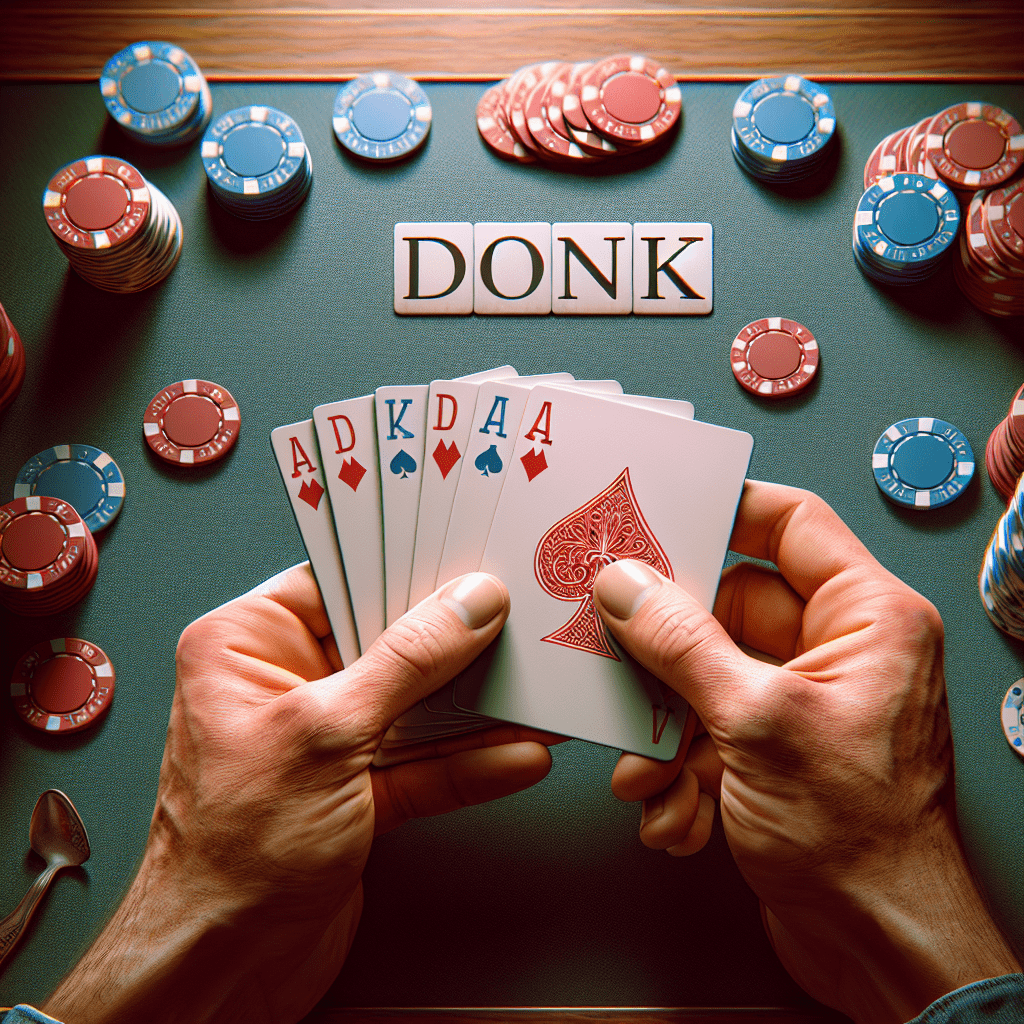
In the simplest sense, “donk” is short for “donkey,” a not-so-flattering nickname used to describe a player who makes questionable decisions or seems to lack a deep understanding of the game. Over time, though, the term has taken on a more specific meaning. These days, “donk” is often used to describe a particular kind of betting action known as a “donk bet.”
Defining the Donk Bet
A donk bet is when a player leads out (bets first) into a player who had the betting lead on the previous street, usually the flop, after someone else raised pre-flop. For example, if Player A raised before the flop and Player B just called, it’s generally expected that Player A will continue to be the aggressor on the flop. If Player B suddenly bets out on the flop instead of checking to Player A, that’s called a donk bet.
Why does this seem strange? Traditionally, the player who took the lead pre-flop (by raising) is given the chance to continue that aggression after the flop. By betting out before them, the “donk bettor” is doing something that can look weak or confusing. They’re basically saying, “I know you were the aggressor, but I’m going to lead the action now,” even though that’s not the usual flow.
Characteristics of a Donk Bet:
- Out of Position: A donk bet usually happens when the bettor is out of position and expected to check first.
- Unexpected Timing: It breaks the normal pattern where the pre-flop raiser continues betting.
- Varied Motivations: Sometimes it’s a sign of poor play, other times it’s a strategic move to throw off opponents.
Why Do Players Donk Bet?
The psychology behind a donk bet can vary:
- Fear or Insecurity: A less experienced player might donk bet because they’re nervous about allowing the original raiser to continue controlling the hand.
- Bluffing or Semi-Bluffing: Some players use donk bets as a bluff, hoping the unexpected aggression will make their opponent fold.
- Value Extraction: In certain situations, a donk bet might be used with a strong hand, trying to milk chips from an unsuspecting opponent who won’t expect strength coming from out of position.
A Quick Example:
Imagine Player A raises pre-flop with a strong hand, say A♠A♥. Player B calls with a speculative hand like 6♣7♣. The flop comes 5♦8♥2♣. Normally, Player B would check, expecting Player A to continue betting. Instead, Player B suddenly leads out with a bet. That’s a donk bet. Player B might be trying to represent a big hand, or maybe they’re just unsure what to do and hope Player A folds.
When Can a Donk Bet Be Good?
While donk bets are often associated with weaker players or poor decisions, they aren’t always bad. A well-timed donk bet can:
- Catch Opponents Off Guard: Against aggressive players who always continuation-bet, leading out might force them to slow down or even fold weaker holdings.
- Protect Vulnerable Hands: If you have a decent but not bulletproof hand, a donk bet might scare off some draws or force a quick decision.
Stats and Trends:
Research is limited, but some data suggests that mixing in occasional donk bets can improve your win rate if done sparingly and intelligently. In lower-stakes games—where players are less attentive to unusual betting patterns—donk bets can be more effective at confusing opponents.
In Conclusion:
A “donk” in poker is both a slightly insulting term for a player and a nickname for a specific betting move. While it’s traditionally associated with inexperienced or unskilled players, a donk bet can also be a deliberate strategic choice. Understanding what a donk bet is and when it might be effective can help you recognize what’s happening at the table and adjust your strategy accordingly.
So next time someone leads out into the pre-flop raiser, consider why they’re doing it. Are they clueless, or are they pulling a clever trick? As with so many aspects of poker, it all depends on the context—and how well you read the situation.