What Is A Dead Man’s Hand In Poker?/h2>Ah, the Dead Man’s Hand! (I hate explaining obvious stuff, but let’s go.) This old poker tale has been around for what feels like forever, and it still sends a bit of a chill down my spine. It’s not just some random bunch of cards. It’s more like a snapshot of the past, packed with drama, risk, and those half-whispered stories that keep folks hooked on the game. If I’m being honest, I’m not 100% sure every detail is true, but that’s part of the fun, isn’t it?
The Origins (Or So They Say)
From what I’ve heard, the Dead Man’s Hand comes straight out of the Wild West. Picture a dusty saloon, a creaky chair, and Wild Bill Hickok sitting at a poker table. Rumor has it that when he got shot in the back (yeah, nice way to end a game), he was holding two pairs—Aces and Eights. This was in 1876, in Deadwood, South Dakota. Whether it’s all perfectly accurate or not is anyone’s guess, but hey, it sure sounds cool enough to last this long.
What’s Actually In This Hand?
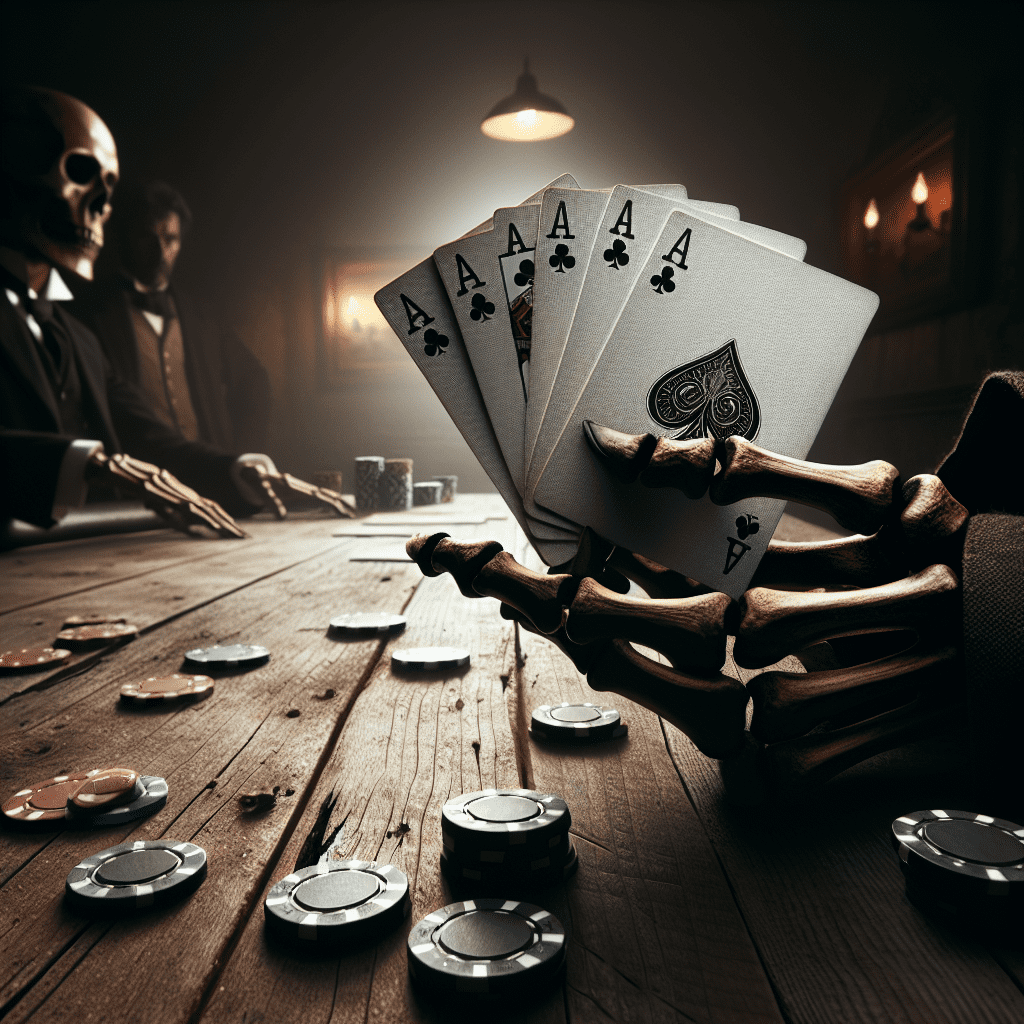
If we’re talking specifics, a Dead Man’s Hand is usually two Aces and two Eights. Some say it’s the black Aces and black Eights, but honestly, I’ve heard a few different versions. Anyway, it’s a pretty strong hand, but there’s this weird undertone of danger attached to it—like power and risk smashed together into a single moment.
Why Does It Matter?
So why do we still care about this dusty old bit of poker lore? To me, it’s because it turns a random set of cards into something memorable. Poker is about tension, high stakes, and the idea that you never really know what’s coming. The Dead Man’s Hand gives you a story to hold onto, like a reminder that even good cards can’t guarantee you’ll walk away a winner. It shows up in movies, books, and casual chatter among gamblers. It’s part of the cultural glue holding together the legend of the game.
Odds? Honestly, Who Cares?
If you’re into numbers, the odds of getting these exact Aces and Eights are tiny. I could throw percentages at you, but at the end of the day, that’s not why it’s famous. It’s famous because of the story. Period.
Wrapping It Up (Kinda)
In the end, the Dead Man’s Hand isn’t just a couple of pairs in your hand—it’s a symbol of everything poker stands for: drama, uncertainty, risk, and, if you believe the old stories, a bit of blood on the table. (I’m not saying that’s a good thing, just that it happened.) It’s not about cold, hard facts. It’s about the feeling, the moment, and the idea that sometimes, even when you’re holding something decent, fate might have other plans. That’s why we still talk about it, and that’s why it still matters—at least to me.