What Hands Win In Poker: A Comprehensive Guide
I remember the first time I tried to make sense of poker hands—it felt like learning a secret language. Kings and Queens, flushes and straights, pairs and trips—it was overwhelming. But once you decode it, knowing what hands win in poker becomes not just useful, but kind of empowering. Let’s break it down in a way that’s easy to follow.

The Basic Rankings: Who’s the Boss?
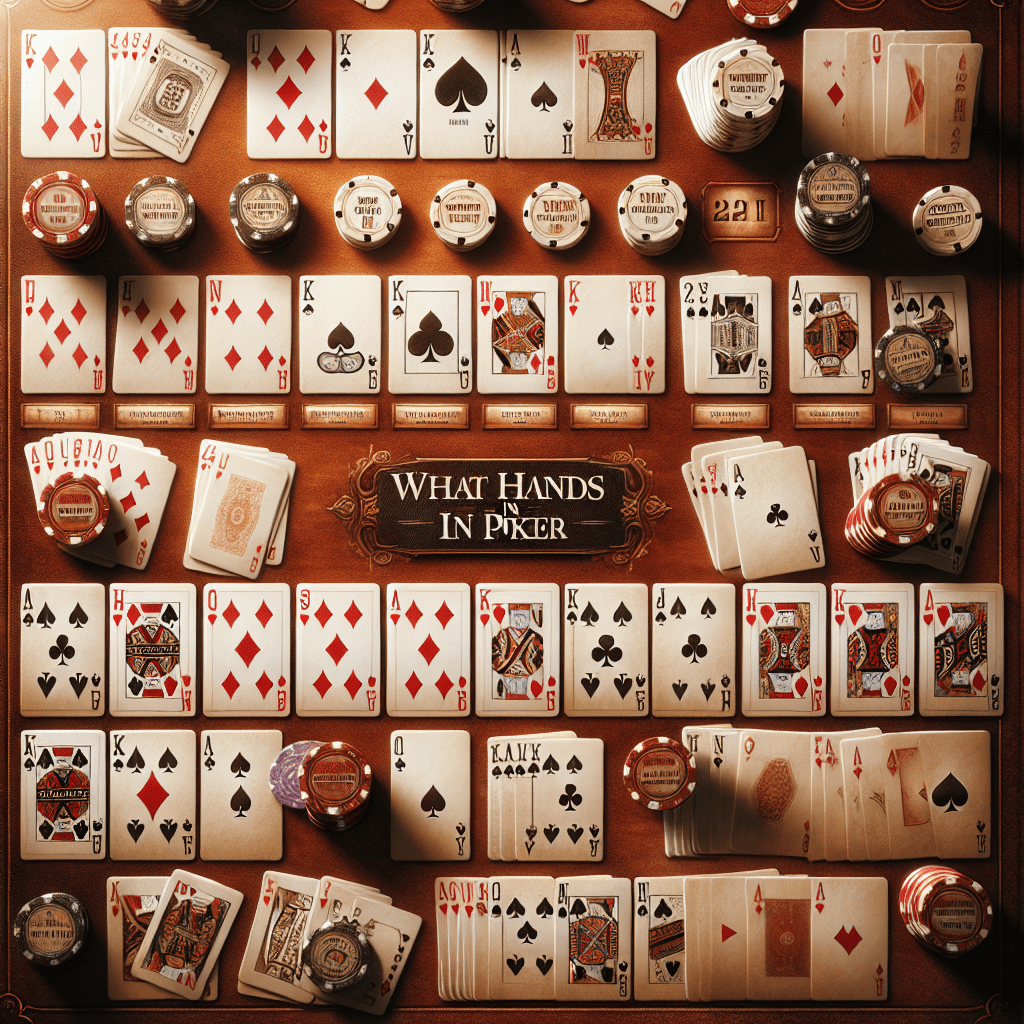
In poker, hands have a hierarchy, like a food chain. At the top sits the Royal Flush—A, K, Q, J, 10, all of the same suit—the untouchable best hand. From there, the rankings descend in strength:
- Royal Flush: A, K, Q, J, 10 of the same suit.
- Straight Flush: Five consecutive cards of the same suit.
- Four of a Kind: Four cards of the same rank.
- Full House: Three of a kind plus a pair.
- Flush: Five cards of the same suit, not in sequence.
- Straight: Five consecutive cards of any suit.
- Three of a Kind: Three cards of the same rank.
- Two Pair: Two different pairs.
- One Pair: Two cards of the same rank.
- High Card: The highest card if no better hand is made.
Memorizing this list will help you quickly determine how strong your hand is compared to others at the table.
Playing Your Winners Wisely
Just knowing the rankings isn’t enough. How you play each hand matters even more. Here’s how to think strategically:
- Strong Hands: If you’re holding a Full House or higher, bet confidently. Build the pot while your opponents are still in.
- Moderate Hands: With a Two Pair or One Pair, play cautiously. Watch for potential straights or flushes on the board.
- Weak Hands: If you only have a High Card or weak Pair, it’s often better to fold unless you’re planning a strategic bluff.
Bluffing: The Art of Telling a Convincing Story
Poker isn’t just about the cards—it’s about how you play them. Even if your hand isn’t strong, you can still win by bluffing. A successful bluff depends on convincing others you have a strong hand. For example:
- Bet aggressively on a board with a potential flush, even if you don’t have it, to make your opponents think you do.
- Don’t overdo it—bluff too often, and your opponents will start calling your bets to catch you out.
Real-World Wisdom
Professional players often make bold folds when they sense their opponent holds a stronger hand, even if their own hand looks good. For example, folding a Full House when the board suggests a Four of a Kind or Straight Flush is possible. At the same time, I’ve seen casual players bluff their way to victory with just a Pair because they read the table correctly.
Putting It All Together
Understanding what hands win in poker is your foundation. From there, you’ll learn to apply strategy, read opponents, and adapt to different situations. Remember:
- Know the rankings.
- Play strong hands aggressively and weak hands cautiously.
- Use bluffs wisely to capitalize on moments of uncertainty.
Whether you’re holding a monster like a Royal Flush or just bluffing your way through with a High Card, poker is a game of strategy and patience. Master the hand rankings and play with a plan, and you’ll be ready to take on any table.