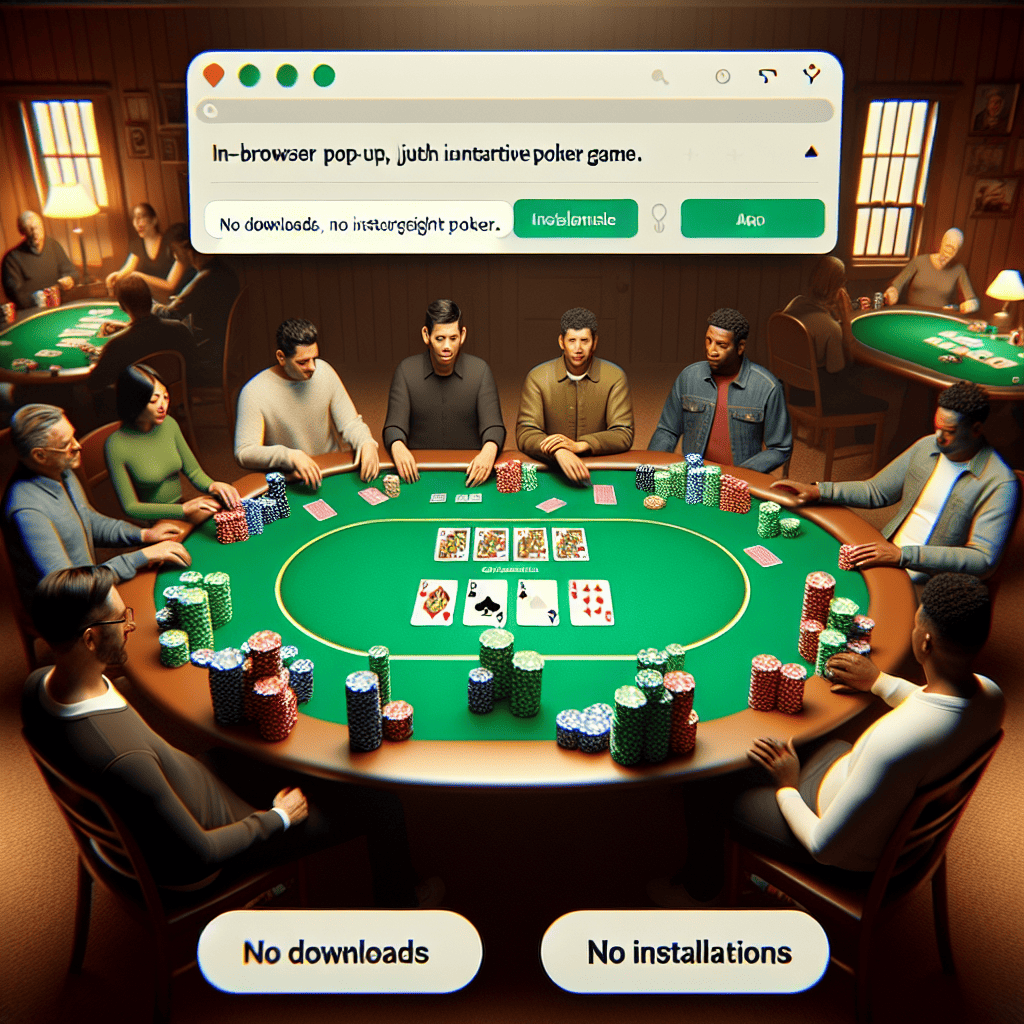
Is Texas Hold’em The Same As Poker? Understanding the Differences and Similarities

When it comes to card games, few are as popular and widely recognized as poker. Among the various forms of poker, Texas Hold’em stands out as the most played variant, especially in casinos and online platforms. However, a common question arises: Is Texas Hold’em the same as poker? To answer this, we need to delve into the nuances of poker as a whole and how Texas Hold’em fits into that broader category.
What is Poker?
At its core, poker is a family of card games that combines elements of chance and skill. Players bet on the strength of their hands, and the game can be played in various formats, including cash games and tournaments. The objective is to win chips or money by either having the best hand at showdown or convincing other players to fold their hands.
Some key characteristics of poker include:
- Betting Rounds: Most poker games involve multiple rounds of betting, where players can check, bet, raise, or fold.
- Hand Rankings: Poker has a standardized set of hand rankings, from high card to royal flush, which determines the winner.
- Player Interaction: Bluffing and reading opponents are crucial skills in poker, adding a psychological element to the game.
Texas Hold’em: A Popular Variant
Texas Hold’em is one of the many variants of poker, but it has gained immense popularity, especially in the last few decades. The game is characterized by its unique rules and gameplay mechanics, which set it apart from other forms of poker.
In Texas Hold’em, each player is dealt two private cards (known as “hole cards”), and five community cards are dealt face-up on the “board.” Players use these cards in combination to make the best possible five-card hand. The game typically consists of four betting rounds:
- Pre-Flop: After receiving their hole cards, players decide whether to call, raise, or fold.
- Flop: Three community cards are revealed, followed by another round of betting.
- Turn: A fourth community card is revealed, leading to another betting round.
- River: The fifth and final community card is revealed, followed by the last round of betting.
Key Differences Between Texas Hold’em and Other Poker Variants
While Texas Hold’em is a form of poker, it differs significantly from other variants like Omaha, Seven-Card Stud, and Five-Card Draw. Here are some of the main differences:
- Number of Hole Cards: In Omaha, players receive four hole cards instead of two, which changes the strategy significantly.
- Community Cards: Seven-Card Stud does not use community cards at all, requiring players to rely solely on their own cards.
- Betting Structures: Different variants have different betting structures, such as pot-limit, no-limit, or fixed-limit, affecting how players approach the game.
Popularity and Cultural Impact of Texas Hold’em
Texas Hold’em’s rise to fame can be attributed to several factors:
- Television Exposure: The World Series of Poker (WSOP) and other televised tournaments have brought the game into the mainstream.
- Online Poker Boom: The advent of online poker platforms has made Texas Hold’em accessible to millions worldwide.
- Celebrity Players: High-profile players like Phil Ivey and Daniel Negreanu have become household names, further popularizing the game.
Statistics show that Texas Hold’em accounts for approximately 80% of all poker games played globally, highlighting its dominance in the poker landscape.
Conclusion: The Distinction Between Texas Hold’em and Poker
In summary, while Texas Hold’em is indeed a form of poker, it is not synonymous with the term “poker” itself. Poker encompasses a wide variety of games, each with its own rules, strategies, and player dynamics. Texas Hold’em has carved out its niche as the most popular variant, thanks to its unique gameplay and cultural significance.
So, to answer the question: Is Texas Hold’em the same as poker? The answer is no; Texas Hold’em is a specific variant within the broader category of poker. Understanding this distinction can enhance your appreciation of the game and its many forms, whether you’re a casual player or a serious competitor.
As you explore the world of poker, remember that each variant offers its own challenges and rewards. Whether you prefer the strategic depth of Texas Hold’em or the unique twists of other poker games, the key is to enjoy the journey and the thrill of the game.