How to Play Poker for Dummies: A Beginner’s Guide
Poker is more than just a card game; it’s a blend of strategy, psychology, and chance. Whether you’re sitting at a casino table or playing with friends at home, understanding the basics of poker can enhance your experience and increase your chances of winning. This guide will walk you through the essentials of how to play poker for dummies, ensuring you grasp the fundamental concepts and strategies needed to enjoy this classic game.
Understanding the Basics of Poker
Before diving into the intricacies of poker, it’s crucial to familiarize yourself with the basic rules and structure of the game. Here are some key components:
- Deck of Cards: Poker is typically played with a standard 52-card deck.
- Players: A game can accommodate 2 to 10 players.
- Objective: The goal is to win chips by either having the best hand at showdown or convincing other players to fold.
- Betting Rounds: Most poker games consist of multiple betting rounds where players can bet, check, raise, or fold.
Popular Variants of Poker
There are numerous variants of poker, each with its own set of rules and strategies. Here are a few popular ones:
- Texas Hold’em: The most popular variant, where players are dealt two private cards and use five community cards to make the best hand.
- Omaha: Similar to Texas Hold’em, but players receive four hole cards and must use two of them in combination with three of the five community cards.
- Seven-Card Stud: Players receive seven cards, three face down and four face up, with no community cards involved.
How to Play Poker for Dummies: The Rules
Now that you have a grasp of the basics and variants, let’s delve into the rules of Texas Hold’em, the most widely played form of poker.
1. The Setup
In Texas Hold’em, each player starts with two private cards (known as hole cards). The game begins with a small blind and a big blind, which are forced bets made by the two players to the left of the dealer.
2. The Betting Rounds
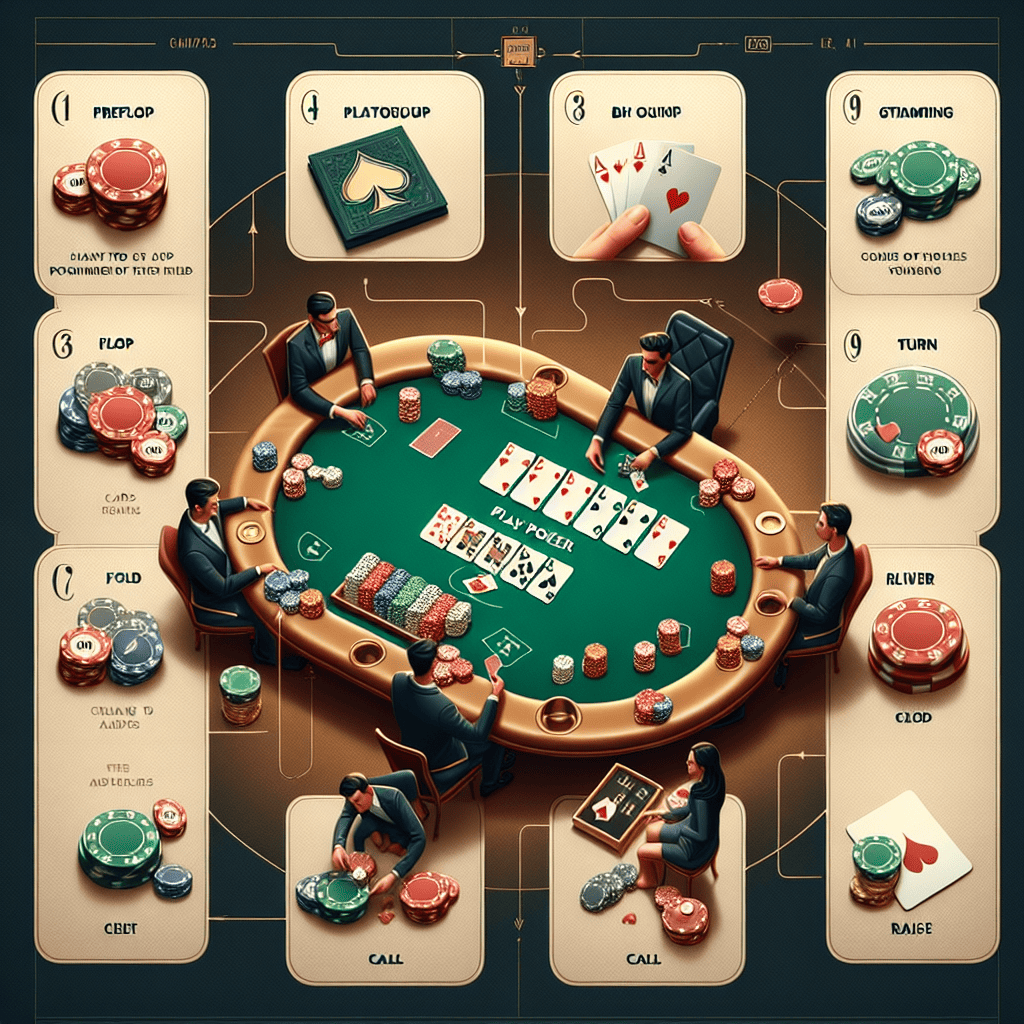
There are four betting rounds in Texas Hold’em:
- Pre-Flop: After receiving hole cards, players can call, raise, or fold.
- Flop: Three community cards are dealt face up. Another round of betting follows.
- Turn: A fourth community card is dealt. Players bet again.
- River: The fifth and final community card is revealed, followed by the last round of betting.
3. Showdown
If there are two or more players remaining after the final betting round, a showdown occurs. Players reveal their hands, and the best hand wins the pot. The hand rankings from highest to lowest are:
- Royal Flush
- Straight Flush
- Four of a Kind
- Full House
- Flush
- Straight
- Three of a Kind
- Two Pair
- One Pair
- High Card
Basic Strategies for Beginners
Now that you know how to play poker for dummies, let’s explore some basic strategies to improve your game:
- Starting Hands: Be selective with the hands you play. Strong starting hands increase your chances of winning.
- Position Matters: Your position at the table affects your strategy. Being last to act gives you more information about your opponents’ actions.
- Pay Attention: Observe your opponents’ betting patterns and behaviors. This can provide valuable insights into their hands.
- Manage Your Bankroll: Set a budget for your poker sessions and stick to it. Avoid chasing losses.
Common Mistakes to Avoid
Even seasoned players make mistakes, but as a beginner, being aware of common pitfalls can help you avoid them:
- Playing Too Many Hands: It’s tempting to play every hand, but patience is key. Fold weak hands.
- Ignoring Position: Failing to consider your position can lead to poor decision-making.
- Overvaluing Hands: Just because you have a strong hand doesn’t mean you should always bet heavily. Assess the board and your opponents.
Conclusion
Poker is a captivating game that combines skill, strategy, and a bit of luck. By understanding the basic rules, familiarizing yourself with different variants, and employing effective strategies, you can enhance your poker experience. Remember, practice makes perfect. The more you play, the better you’ll become. So gather your friends, shuffle the deck, and enjoy the thrilling world of poker!
In summary, this guide on how to play poker for dummies has equipped you with the foundational knowledge needed to start your poker journey. Embrace the learning process, and soon you’ll be bluffing and betting with confidence!