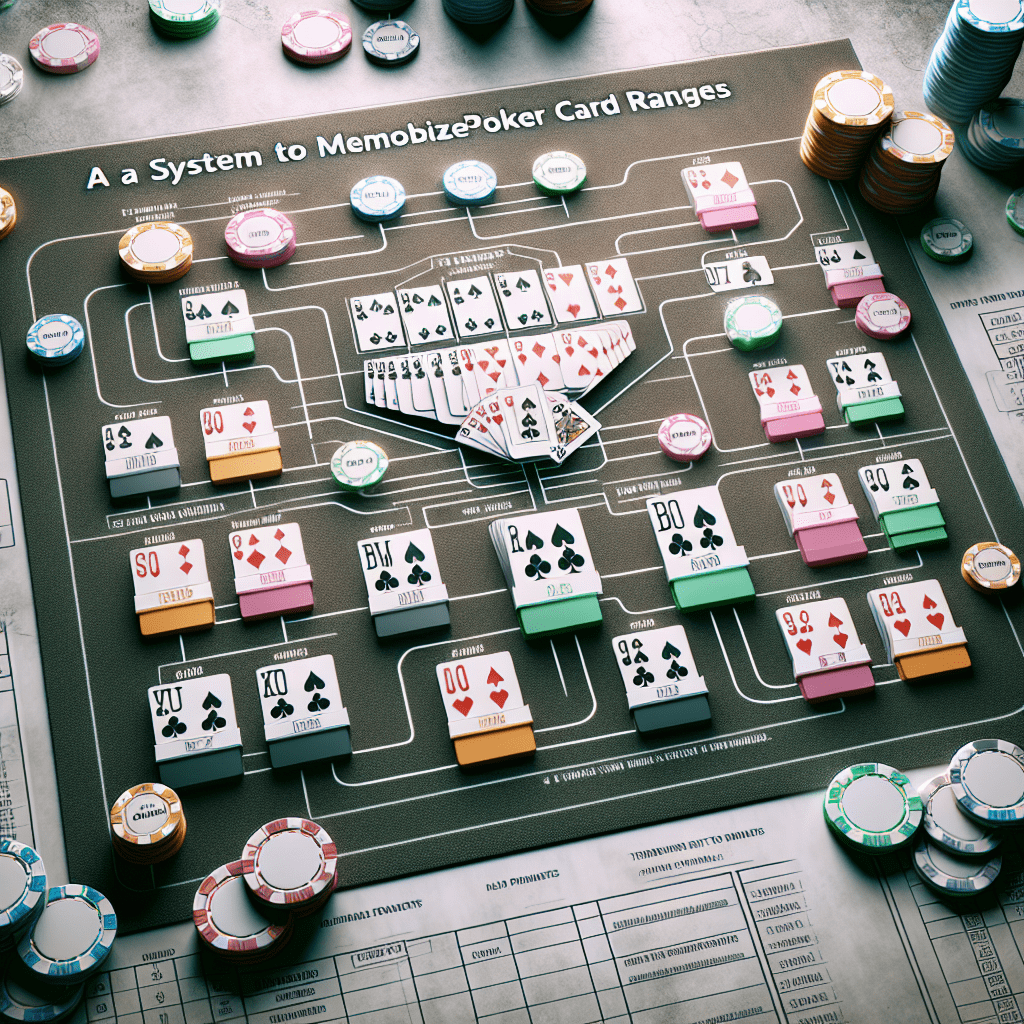
How to Memorize Poker Ranges: A Comprehensive Guide

In the world of poker, understanding hand ranges is crucial for making informed decisions at the table. Whether you’re a novice player or a seasoned pro, mastering the art of memorizing poker ranges can significantly enhance your game. This article will delve into effective strategies, techniques, and tools to help you memorize poker ranges, ultimately improving your overall performance.
Understanding Poker Ranges
Before we dive into memorization techniques, it’s essential to grasp what poker ranges are. A poker range refers to the spectrum of hands that a player might hold in a given situation. Instead of thinking in terms of specific hands, players should consider ranges, which can include:
- Strong hands (e.g., pocket aces, kings)
- Medium-strength hands (e.g., suited connectors, middle pairs)
- Weak hands (e.g., low offsuit cards)
By categorizing hands into ranges, players can make better decisions based on their opponents’ likely holdings. This approach is particularly useful in no-limit Texas Hold’em, where the dynamics of the game can shift rapidly.
Why Memorizing Poker Ranges is Important
Memorizing poker ranges is not just about rote learning; it’s about developing a strategic mindset. Here are some reasons why it’s vital:
- Improved Decision-Making: Knowing the ranges allows players to make more informed decisions regarding betting, calling, or folding.
- Enhanced Reading Skills: Understanding ranges helps players read their opponents better, predicting their actions based on the hands they might hold.
- Increased Confidence: Familiarity with ranges can boost a player’s confidence, allowing them to play more aggressively and effectively.
How to Memorize Poker Ranges
Now that we understand the importance of poker ranges, let’s explore effective methods for memorizing them. Here are some strategies that can help you internalize these ranges:
1. Use Visual Aids
Visual aids can be incredibly helpful when memorizing poker ranges. Consider the following:
- Hand Charts: Create or download hand charts that categorize hands into different ranges. These charts can serve as quick references during practice sessions.
- Color-Coding: Use colors to differentiate between strong, medium, and weak hands. This visual distinction can make it easier to recall ranges during gameplay.
2. Practice with Software Tools
There are numerous software tools available that can help you practice and memorize poker ranges. Some popular options include:
- PokerStove: This tool allows you to analyze hand ranges and equity, helping you visualize how different hands perform against each other.
- Equilab: Similar to PokerStove, Equilab provides a user-friendly interface for range analysis and can help reinforce your understanding of hand ranges.
3. Engage in Active Learning
Active learning techniques can significantly enhance your memorization process. Here are some methods to consider:
- Flashcards: Create flashcards with different ranges on one side and their corresponding hand categories on the other. Regularly test yourself to reinforce your memory.
- Role-Playing: Engage in role-playing scenarios where you simulate different poker situations. This practice can help you apply your knowledge of ranges in real-time.
4. Analyze Real Game Scenarios
One of the best ways to memorize poker ranges is by analyzing real game scenarios. Consider the following approaches:
- Hand History Review: Review your past hands and analyze the ranges you and your opponents played. This reflection can help solidify your understanding of ranges in various contexts.
- Watch Professional Games: Observe professional players and their decision-making processes. Pay attention to how they utilize ranges in different situations.
Case Study: The Impact of Memorizing Ranges
To illustrate the importance of memorizing poker ranges, let’s consider a case study involving a player named Alex. Alex was an average player who struggled with decision-making during critical moments in games. After dedicating time to memorizing poker ranges using the techniques outlined above, Alex noticed a significant improvement in his gameplay.
In a recent tournament, Alex faced a tough opponent who was known for aggressive play. By applying his knowledge of ranges, Alex was able to accurately assess his opponent’s likely holdings and make strategic decisions that ultimately led him to victory. This experience not only boosted Alex’s confidence but also reinforced the value of understanding and memorizing poker ranges.
Statistics on Poker Ranges and Success
Research has shown that players who effectively utilize hand ranges tend to perform better in poker tournaments. A study conducted by the University of Nevada found that:
- Players who understood and applied ranges had a 20% higher win rate compared to those who did not.
- Players who regularly practiced range memorization techniques reported increased confidence and improved decision-making skills.
These statistics highlight the tangible benefits of mastering poker ranges and the impact it can have on a player’s success at the table.
Conclusion
Memorizing poker ranges is an essential skill for any serious player looking to improve their game. By employing visual aids, utilizing software tools, engaging in active learning, and analyzing real game scenarios, players can effectively internalize these ranges. The case study of Alex demonstrates the practical benefits of this knowledge, while statistics underscore its importance in achieving success in poker.
In summary, understanding how to memorize poker ranges not only enhances your gameplay but also builds your confidence and decision-making abilities. As you continue to practice and refine your skills, you’ll find that your understanding of poker ranges will become second nature, allowing you to navigate the complexities of the game with ease.