How to Clean a Poker Table: A Comprehensive Guide
Whether you’re a casual player or a serious enthusiast, maintaining your poker table is essential for both aesthetics and gameplay. A clean poker table not only enhances the overall experience but also prolongs the life of the table itself. In this article, we will explore effective methods and tips on how to clean a poker table, ensuring it remains in top condition for your next game night.
Understanding Your Poker Table
Before diving into the cleaning process, it’s crucial to understand the materials and construction of your poker table. Most poker tables are made from a combination of wood, felt, and sometimes vinyl. Each material requires a different cleaning approach:
- Wood: Often used for the table’s frame and legs, wood can be sensitive to moisture and harsh chemicals.
- Felt: The playing surface, typically made from wool or polyester, can attract dirt and stains easily.
- Vinyl: Commonly used for padding and armrests, vinyl is durable but can be prone to scratches.
Knowing these materials will help you choose the right cleaning products and techniques.
Essential Cleaning Supplies
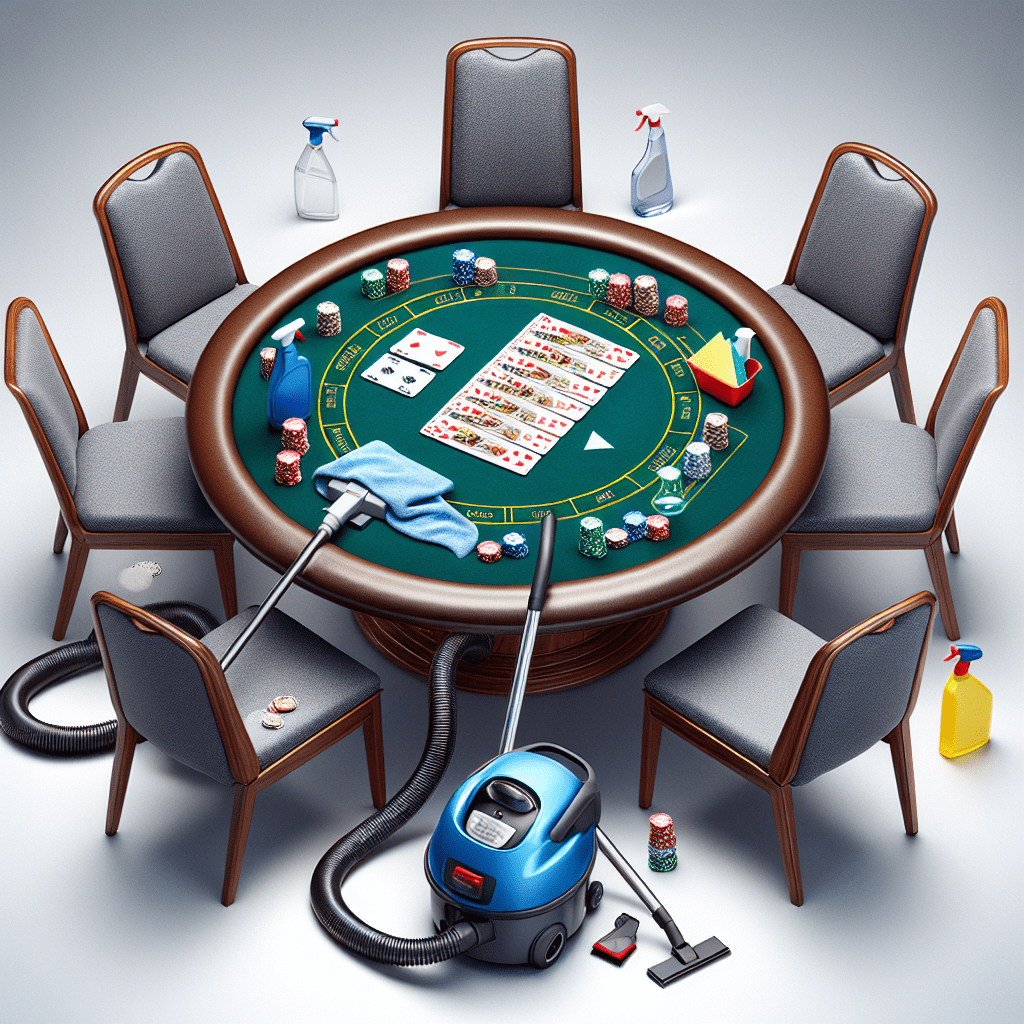
To effectively clean your poker table, gather the following supplies:
- Soft microfiber cloths
- Gentle dish soap or a mild cleaner
- Water
- Vacuum cleaner with a brush attachment
- Stain remover (if necessary)
- Wood polish (for wooden surfaces)
Having these items on hand will make the cleaning process smoother and more efficient.
Step-by-Step Guide on How to Clean a Poker Table
Now that you have your supplies ready, let’s break down the cleaning process into manageable steps:
1. Clear the Table
Start by removing all items from the table, including chips, cards, and any decorative elements. This will give you a clear workspace and prevent any items from getting damaged during cleaning.
2. Vacuum the Surface
Using a vacuum cleaner with a brush attachment, gently vacuum the felt surface to remove dust, crumbs, and debris. Be careful not to damage the felt; a soft brush will help lift dirt without pulling fibers.
3. Clean the Felt
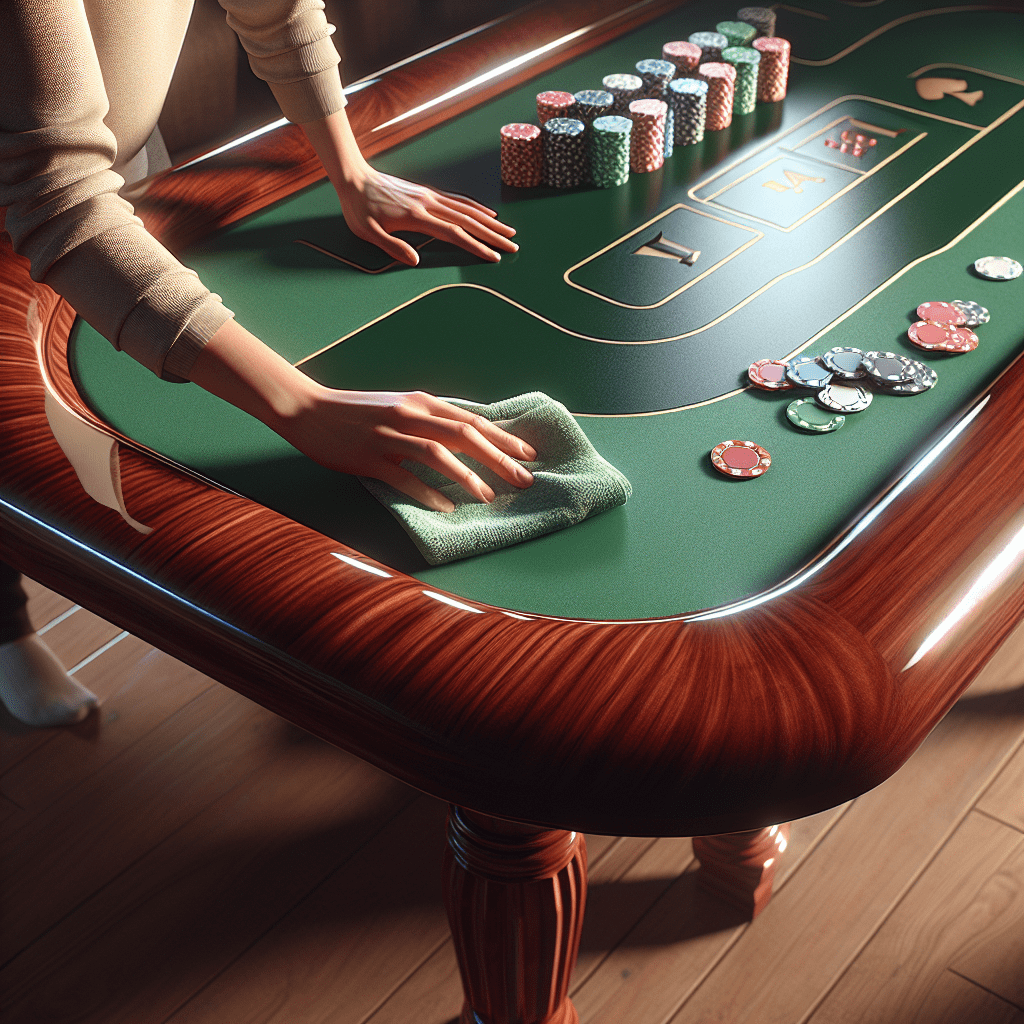
To clean the felt, mix a few drops of gentle dish soap with warm water. Dampen a microfiber cloth with the solution (make sure it’s not soaking wet) and gently wipe the felt surface. Avoid scrubbing too hard, as this can damage the fibers. For stubborn stains, consider using a specialized felt cleaner or a stain remover designed for fabrics.
4. Wipe Down Wooden Parts
For wooden components, use a separate microfiber cloth slightly dampened with water. Wipe down the wood to remove any dust or fingerprints. After cleaning, apply a small amount of wood polish to another cloth and buff the surface to restore its shine.
5. Clean Vinyl Areas
If your poker table has vinyl components, use a damp cloth with mild soap to wipe them down. Rinse the cloth and wipe again to remove any soap residue. Dry the vinyl with a clean, dry cloth to prevent water spots.
6. Final Touches
Once everything is clean, allow the table to air dry completely before setting it up for your next game. This will help prevent any moisture-related issues.
Regular Maintenance Tips
Cleaning your poker table is not just a one-time task; regular maintenance will keep it looking great and functioning well. Here are some tips to consider:
- Use a Table Cover: Protect your table from dust and spills by using a cover when it’s not in use.
- Regular Dusting: Dust the table weekly to prevent buildup.
- Immediate Stain Treatment: Address spills and stains as soon as they occur to prevent them from setting.
- Rotate Players: If you frequently host games, consider rotating seating arrangements to minimize wear on specific areas.
Case Study: The Impact of Regular Cleaning
A local poker club in Las Vegas implemented a strict cleaning regimen for their tables, which included daily vacuuming and weekly deep cleaning. Over six months, they reported a 30% decrease in complaints about the playing surface and an increase in member satisfaction. This case highlights the importance of regular maintenance and its direct impact on the gaming experience.
Conclusion
Cleaning your poker table may seem like a daunting task, but with the right approach and tools, it can be a straightforward process. By understanding the materials, using appropriate cleaning supplies, and following a step-by-step guide on how to clean a poker table, you can ensure that your table remains in excellent condition for years to come. Regular maintenance not only enhances the aesthetic appeal but also contributes to a better gaming experience for you and your guests. Remember, a clean poker table is a happy poker table!