How Many Cards in Omaha Poker: A Comprehensive Guide

Omaha poker is a thrilling variant of the traditional Texas Hold’em, known for its unique rules and strategic depth. One of the most common questions among newcomers and even seasoned players is, “How many cards in Omaha poker?” Understanding the card structure is crucial for mastering the game. In this article, we will explore the number of cards dealt in Omaha, the implications of this structure on gameplay, and strategies to enhance your winning potential.
Understanding the Basics of Omaha Poker
Before diving into the specifics of card distribution, it’s essential to grasp the fundamental rules of Omaha poker. The game is typically played with a standard 52-card deck and can accommodate 2 to 10 players. The objective is to create the best five-card hand using a combination of hole cards and community cards.
Card Distribution in Omaha
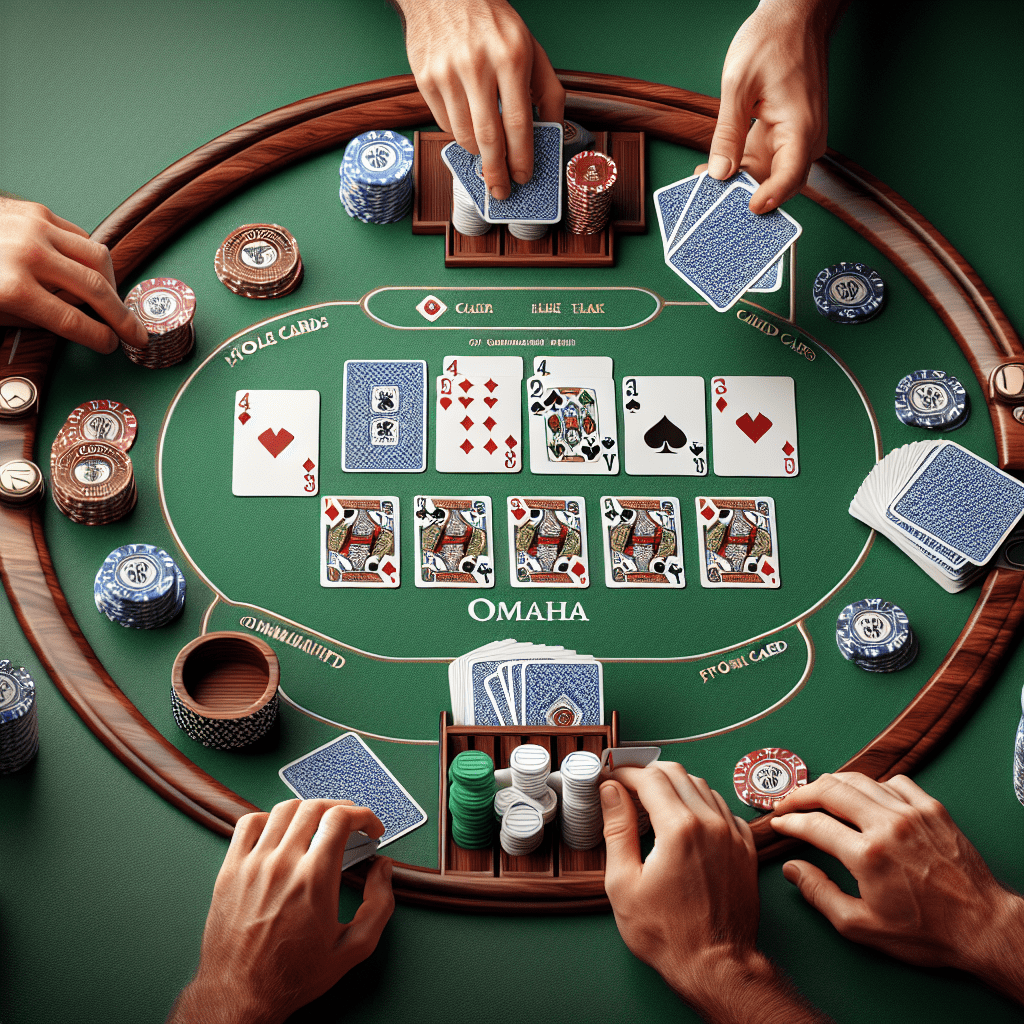
So, how many cards in Omaha poker? Each player is dealt four private cards, known as hole cards. This is a significant difference from Texas Hold’em, where players receive only two hole cards. The game then progresses through a series of betting rounds, with five community cards revealed on the table.
- Pre-Flop: Each player receives four hole cards.
- Flop: Three community cards are dealt face-up.
- Turn: A fourth community card is added.
- River: The fifth and final community card is revealed.
Players must use exactly two of their four hole cards in combination with three of the five community cards to form their final hand. This rule adds a layer of complexity and strategy that distinguishes Omaha from other poker variants.
The Strategic Implications of Four Hole Cards
The presence of four hole cards significantly alters the dynamics of Omaha poker. Here are some strategic implications to consider:
- Increased Hand Combinations: With four hole cards, players have a wider range of potential hands. This increases the likelihood of strong hands, such as straights and flushes.
- More Complex Decision-Making: The requirement to use two hole cards means players must think critically about which cards to play and how they interact with the community cards.
- Higher Variance: The increased number of possible hands can lead to more unpredictable outcomes, making it essential for players to adapt their strategies frequently.
Examples of Hand Construction in Omaha
To illustrate the importance of understanding how many cards in Omaha poker affect hand construction, let’s consider a few examples:
- Example 1: A player holds 8♠, 8♦, K♣, Q♠ and the community cards are 8♥, 5♣, 2♦, J♠, 3♣. The best hand is four of a kind (eights).
- Example 2: A player has A♣, A♦, 10♠, 10♦ and the community cards are K♠, Q♣, J♦, 9♠, 2♣. The best hand is a straight (10 to Ace).
- Example 3: A player holds 5♠, 5♦, 6♣, 7♠ and the community cards are 4♣, 3♠, 2♦, 8♠, 9♣. The best hand is a straight (2 to 6).
These examples highlight how the combination of hole cards and community cards can lead to various strong hands, emphasizing the need for strategic thinking in Omaha poker.
Common Variants of Omaha Poker
Omaha poker comes in several popular variants, each with its own unique rules and strategies. Understanding these variants can further enhance your gameplay:
- Omaha Hi: The most common form, where the highest hand wins the pot.
- Omaha Hi-Lo (8 or Better): In this variant, the pot is split between the highest and lowest hands, provided the low hand qualifies (must be 8 or lower).
- PLO (Pot-Limit Omaha): A popular format where the maximum bet is the current size of the pot, leading to larger pots and more aggressive play.
Statistics and Popularity of Omaha Poker
Omaha poker has gained immense popularity over the years, particularly in online poker rooms. According to recent statistics:
- Omaha poker accounts for approximately 20% of all online poker games.
- In live tournaments, Omaha events often attract larger fields than traditional Hold’em tournaments.
- The World Series of Poker (WSOP) features multiple Omaha events, showcasing its significance in the poker community.
This growing interest in Omaha poker highlights the need for players to familiarize themselves with its unique rules and strategies, particularly regarding the number of cards dealt.
Tips for Mastering Omaha Poker
To excel in Omaha poker, consider the following tips:
- Play Strong Starting Hands: Focus on hands that have the potential to make strong combinations, such as double-suited cards or connected cards.
- Be Aware of Position: Your position at the table can significantly impact your strategy. Play more aggressively in late position.
- Understand Pot Odds: Familiarize yourself with pot odds and implied odds to make informed betting decisions.
- Practice Bankroll Management: Set limits for yourself and stick to them to avoid significant losses.
Conclusion
In summary, understanding how many cards in Omaha poker are dealt is fundamental to mastering this exciting variant. With four hole cards and five community cards, players must navigate a complex landscape of potential hands and strategic decisions. By grasping the nuances of Omaha poker, including its variants and strategic implications, players can enhance their gameplay and increase their chances of success. Whether you’re a novice or a seasoned player, embracing the intricacies of Omaha will undoubtedly elevate your poker experience.